Some films survive through fame,
Others survive only through memory and fragments.
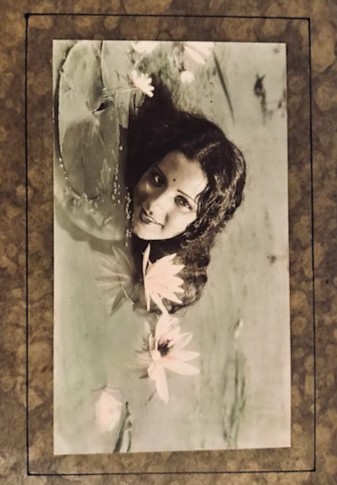
Painted Angel (1931) belongs to the latter: a short film from the earliest years of Indian cinema, quietly resting at the intersection of history and mystery. Produced in a time when Indian filmmaking itself was still discovering its voice, Painted Angel stands today not as a widely seen work, but as a powerful reminder of how much of our cinematic past remains unspoken, undocumented, and yet profoundly significant.
Produced by the Ranjit Film Company, one of the formative studios of early Indian cinema, Painted Angel was directed by Nandlal Jaswantlal, a name that would later become synonymous with some of the industry’s most influential films.
It emerged in 1931, the very year Indian cinema entered the sound era, places this short film at a particularly pivotal cultural moment, when technology, storytelling, and audience imagination were rapidly transforming. Though traces of information about Painted Angel could be recovered, the film Street Angels (1933) remains shrouded in a sea of forgotten history.
Yet today, Painted Angel exists more as a trace than a text. Details surrounding its duration, full cast, and narrative remain elusive. What we know of it, must be read with curiosity.
About the Director
The significance of Painted Angel deepens when viewed through the life of its director. Nandlal Jaswantlal, born in 1907 in Bardoli, Gujarat, entered cinema not as a star, but as a studio employee at Kohinoor Studio in the mid-1920s.
Like many pioneers of early Indian film, his education was practical and immersive. He later assisted the legendary Chandulal Shah at Ranjit Film Company, absorbing the art of filmmaking during the silent era; learning to tell stories visually and with emotional clarity. Between 1929 and 1933, Jaswantlal directed films for Ranjit Studio, navigating an industry that was reshaping itself. Painted Angel belongs to this formative period, when experimentation outweighed certainty.
Decades later, Jaswantlal would go on to direct landmark films such as Anarkali (1953), hailed for its grandeur and emotional depth, and Nagin (1954), a massive commercial success that left an indelible mark on popular cinema. Seen in hindsight, Painted Ange becomes an early brushstroke by a filmmaker still discovering his voice.
Conclusion & IMP
The scarcity of information surrounding Painted Angel is not a failure of history; it is a call for preservation Early Indian cinema was ephemeral by nature. Films were shot quickly, stored poorly, often recycled or discarded. Documentation was incidental, not intentional. As a result, countless works now survive only through studio records, newspaper mentions, or personal recollections, IF AT ALL.
Painted Angel (1931) may never be recovered in full, but its existence: documented, acknowledged, and contextualised, ensures that it is not erased. In remembering Painted Angel, we honour not only a film, but a moment in Indian cultural history. Sometimes, history speaks the loudest through what it leaves behind.
About Conferro Heritae
As of the largest private collectives of vintage publications, art and collectibles, Conferro Heritae believes in true art aesthetics. As custodians of the largest collection of Swaroop’s work, Conferro has been consistently promoting and educating the world about the work of the maestro, who is now predicted to be the next big name in the Indian Art Market!
An underrated master whose legacy awaits to be unveiled completely, we, at Conferro Heritae aim to revive Swaroop’s name from the myth, before the world.