ARTIST IN FOCUS: JYOTI SWAROOP
TO WHOM IT MAY CONCERN:
Jyoti Swaroop in the Words of the Modern Masters
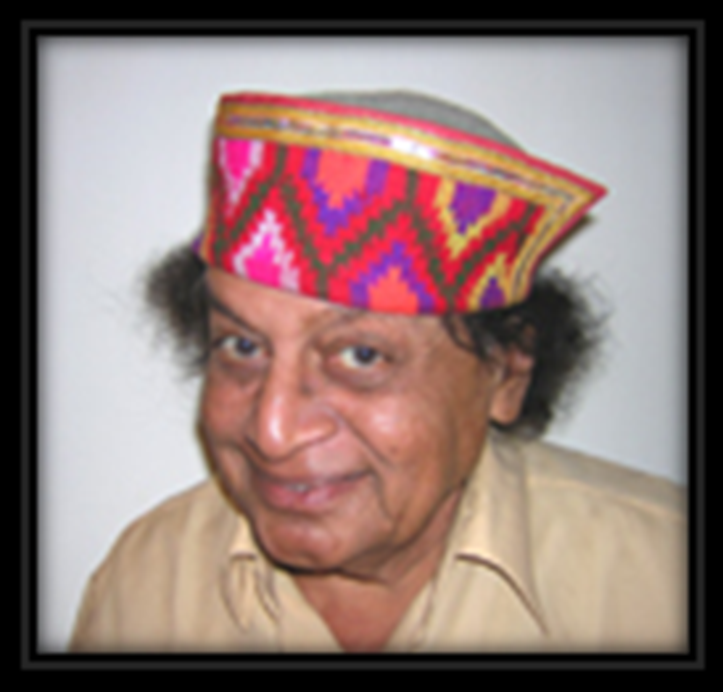
If a twist of fate has aligned so many modern masters from the history of Indian Art to praise another, it has been bestowed solely to Jyoti Swaroop. Revered as a genius with an original vision by his, Swaroop’s work speaks with an intuitive wholeness. Though eclipsed by the halo of the recognition received by the early market favourites during his lifetime, the appeal of his work has rekindled an usher about him, and this time; it is beyond the boundaries of the land he loved. Hailing from Rajasthan, Jyoti Swaroop grew up surrounded by the folk tales of the metaphysical world; a world that often came alive in his paintings. With an innate love for the landscapes before him, one often finds them morphed into abstractions in his work. Over the years of his interactions with Rajasthani artists, Swaroop desired to create a distinction from the characteristic miniature style paintings, in his own work. His desire led him to Delhi, which opened a world of novelty he had not experienced before, and thus begun the evolution of the name that has been equally praised by the likes of M.F. Husain, Krishen Khanna, Satish Gujral, K.S. Kulkarni and the Lalit Kala Akademi, among many others.
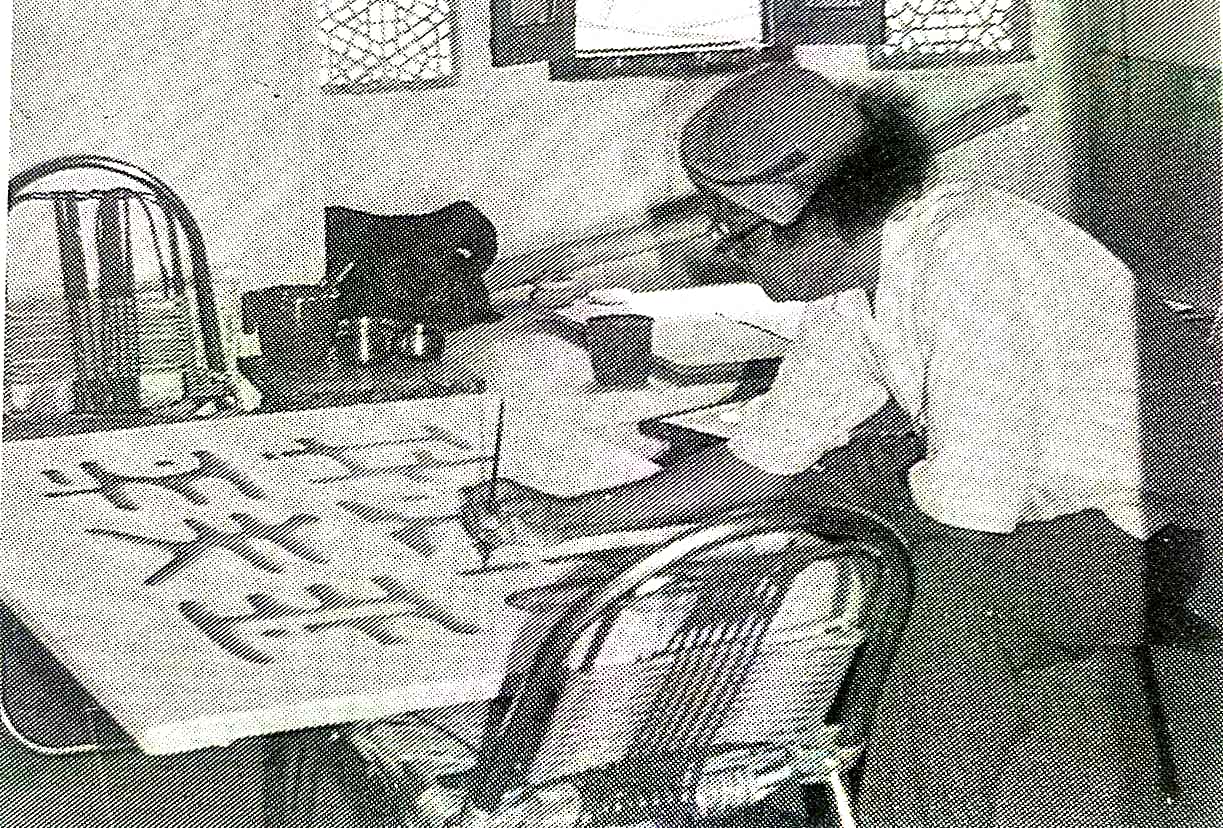
Jyoti Swaroop’s work is led by a marriage of bold, assertive brushstrokes. With a myriad of powerful colours at display, the artwork offers a macroscopic glance at his oeuvre. A continuum of textures, keenly fleshed out by warm, vibrant undertones light up the mystical quality of abstract art, that has persevered through the span of a century. In his work, an innate understanding of colours and hues merge into one another, and rise as a new exclamation on the vast canvas. His immediate answer to space is restructured in a blend of technique, and a distinct visual pattern iterated throughout his works. The ends of the journey of the brush are often left undefined in Swaroop’s work. The pigment travels across the canvas in swift strokes, with an almost lyrical rhythm: halting, repeating and vanishing into the oblivion of the master’s mind. His primary materials included watercolour, charcoal, oil and mixed media, but upon an introspection, one realises that charcoal and watercolour were highly favoured by Swaroop. His works are often depicted as a part of a series, with popular ones including “Inner Jungle” and “Sounds”.
In 1962, he was awarded a Junior Research Fellowship from the Government of India to study and practice art. He came to Delhi for his fellowship and had his first one man show at the All India Fine Arts and Crafts Society (AIFACS), which received great acclaim in the press. He was the recipient of further state awards by the RLKA in the years 1964, 1966, 1967, 1968 and 1981. He exhibited his works around India, and also in the USA.
He subsequently designed murals, commissioned by various government and private organisations that included the Rajasthan Pavillion at the International Trade Fair held in Delhi and E.S.I Hospital Building; Tourism department to name a few. He was bestowed with RLKA’s highest honour in 1986, when he was conferred with the honour of the ‘Fellowship’ (Kalavid) for his contribution to the field of Art. He passed away in 2009, but his work lives on. In a recent resurgence of Swaroop’s legacy, his work was auctioned at Bonhams, London in 2022.
Swaroop’s Chemical Etching on Paper is on-of-its-kind and experimental, a stellar sight selected to be a part of the upcoming Modern & Contemporary South Asian Art Auction at Bonhams, London. To be held on December 9th, 2025, the auction features Swaroop’s rare work: reminiscent of Gaitonde’s signature style, yet unique in its own composition, along with other modern Indian and masters. An underrated master whose legacy awaits to be unveiled completely, we aim to revive Swaroop’s name from the myth, before the world.
Jyoti Swaroop: The Master, The Myth.